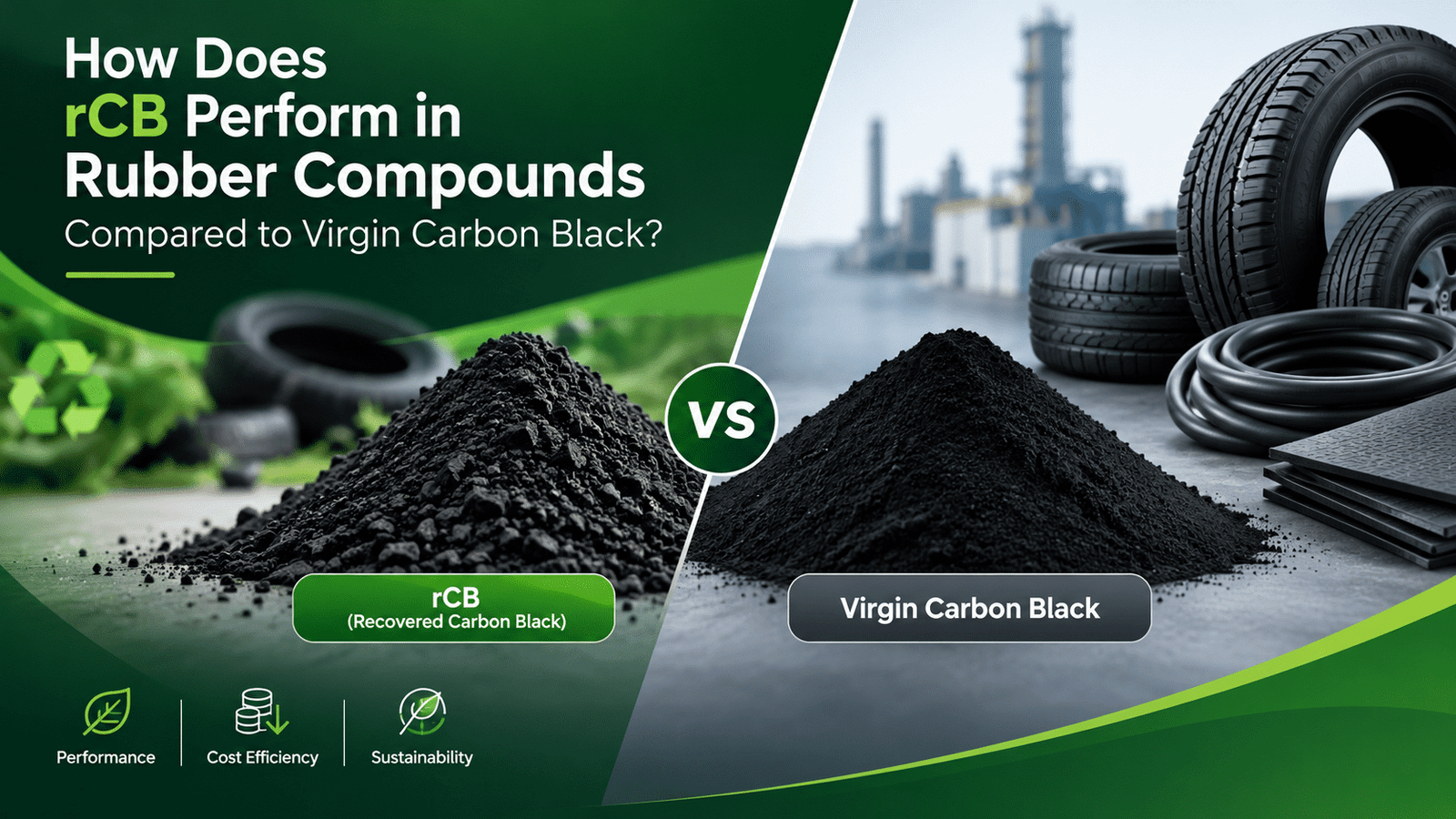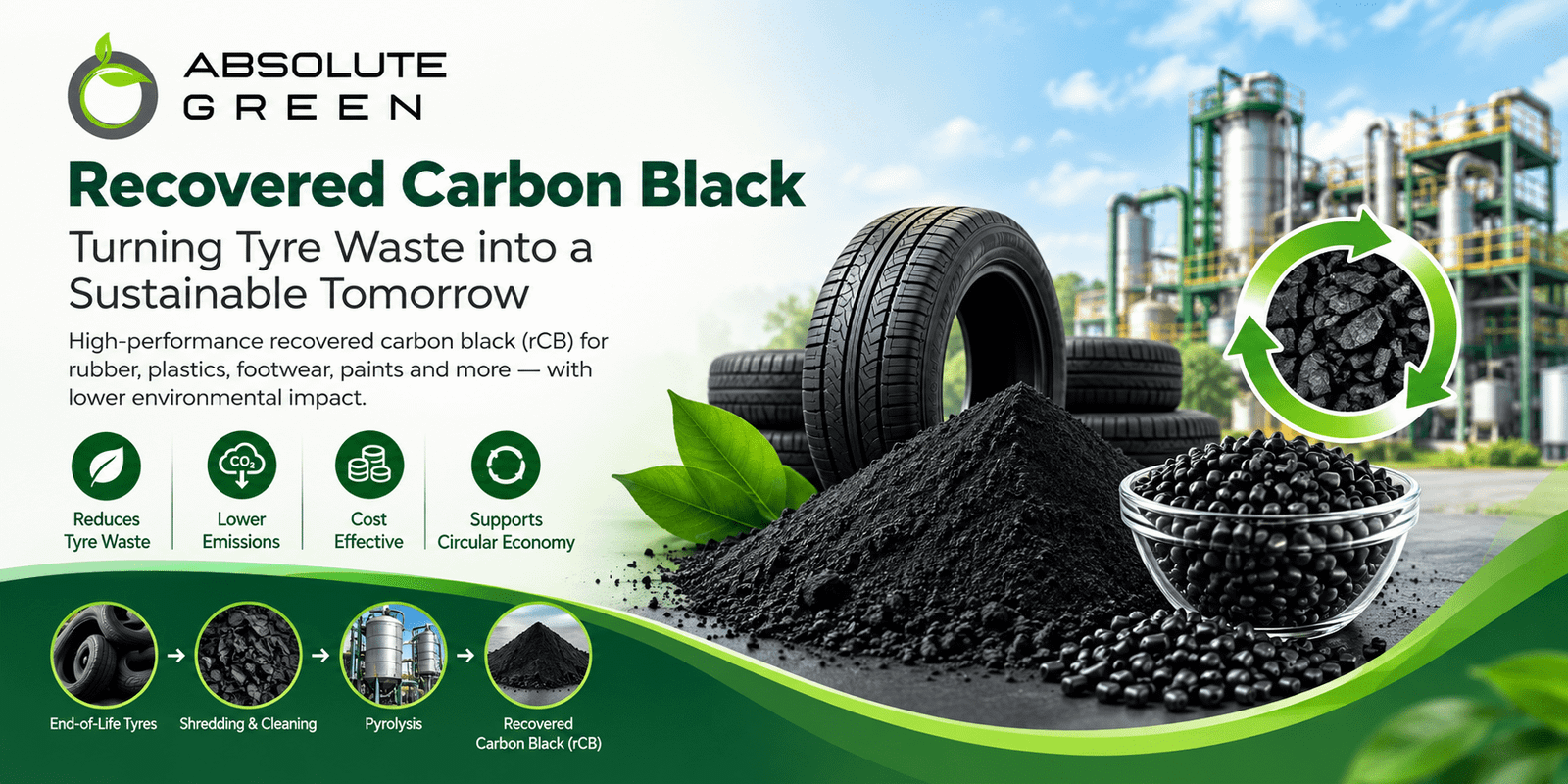
If you’ve ever handled carbon black in a plant setting, you know the powder form can be a headache — it gets everywhere, clings to equipment, and makes cleanup a chore. That’s exactly why so many manufacturers have shifted to pelletized carbon black. This form has become the standard choice across tire plants, rubber processors, plastic compounders, and coating manufacturers who need a material that’s easier to move, measure, and mix without the mess that comes with fine powder.
Quick Answer: Pelletized carbon black is carbon black that has been compressed into small, dense granules instead of being left as a loose, fine powder. Manufacturers pelletize it to cut down on dust, make handling and shipping safer, and allow for more consistent mixing in rubber, plastic, and coating production.
Key Takeaways
- Pelletized carbon black is chemically identical to powder carbon black — only the physical form changes.
- Pelletizing reduces airborne dust, improves flow, and makes bulk handling and shipping far more practical.
- It’s used across tires, rubber goods, plastics, masterbatch, conductive compounds, and coatings.
- Carbon black grading generally follows ASTM D1765 classification, which groups grades by particle size and structure.
- Moisture control during storage is the single biggest factor in keeping pellets intact.
- Choosing a reliable pelletized carbon black supplier matters as much as the technical spec sheet — consistency between shipments is where quality really shows up.
Table of Contents
- What Is Pelletized Carbon Black?
- How Pelletized Carbon Black Is Made
- Why Industries Prefer Pelletized Carbon Black
- Common Uses of Pelletized Carbon Black
- Pelletized Carbon Black vs Powder Carbon Black
- Key Properties
- Storage and Handling Tips
- Choosing the Right Grade
- What Buyers Should Ask Before Choosing a Supplier
- Frequently Asked Questions
What Is Pelletized Carbon Black?
Carbon black itself is a fine, black powder made mostly of carbon. It’s produced by burning heavy petroleum or coal-based oils under controlled conditions with limited oxygen — a process that leaves behind tiny carbon particles. On its own, this powder is extremely light and fluffy, almost like soot, which makes it difficult to work with on an industrial scale.
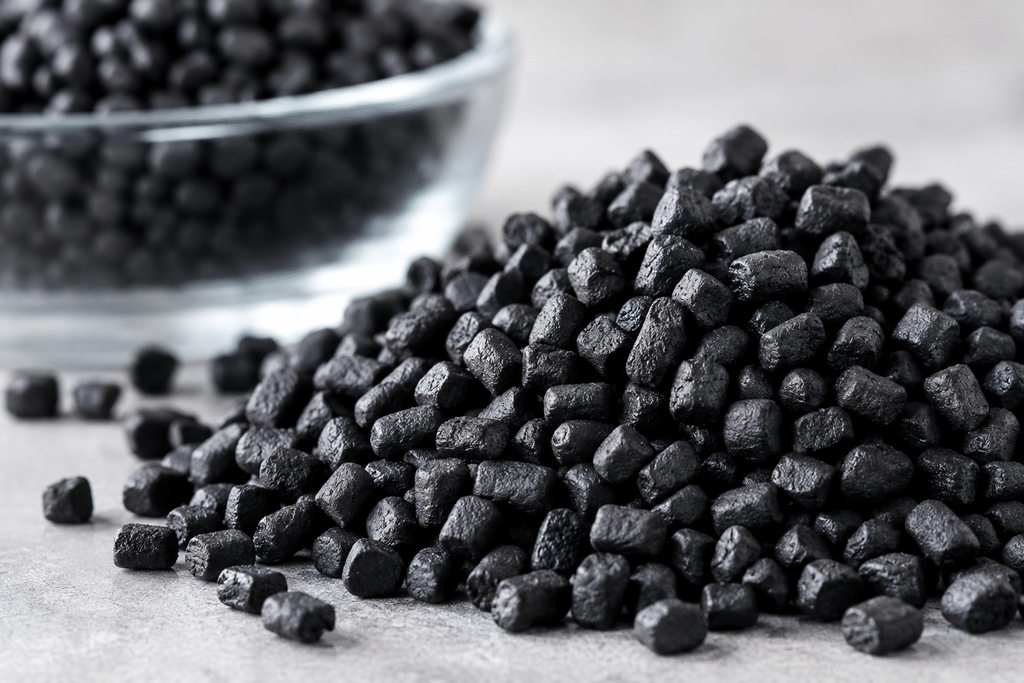
To solve that problem, producers run the powder through a pelletizing process that binds the particles together into small round or slightly irregular granules, usually a few millimeters wide. The pellets are still carbon black chemically — nothing about the material itself changes — but physically, they behave in a completely different way.
Picture the difference between flour and small breadcrumbs. Both are made of the same base ingredient, but one flies into the air at the slightest breeze while the other stays put and pours cleanly. That’s roughly the relationship between powder and pelletized carbon black.
This pelletized form is preferred almost everywhere carbon black is used in bulk, simply because it’s more practical to store, transport, and feed into production equipment. Grading standards such as ASTM D1765, and quality references from established producers like Cabot Corporation and Continental Carbon, are commonly used across the industry to classify carbon black by particle size, structure, and surface area — regardless of whether the final form is powder or pellet.
How Pelletized Carbon Black Is Made
The process sounds complicated, but it really comes down to five straightforward stages.
Feedstock preparation. Producers start with a heavy oil feedstock, often a byproduct of petroleum refining or coal tar processing. The quality of this feedstock has a direct effect on the final carbon black’s particle size and structure.
Furnace processing. The feedstock is injected into a high-temperature furnace and burned with a controlled, limited oxygen supply. This partial combustion is what produces raw carbon black particles rather than complete combustion, which would just produce carbon dioxide and ash.
Pelletizing. The raw carbon black powder is mixed with water (and sometimes a small amount of binder) inside a pelletizing drum or pin mixer. As the mixture tumbles, small wet pellets start to form, similar to how snow packs into snowballs when you roll it.
Drying. The wet pellets pass through rotary dryers that remove moisture without damaging the pellet structure. Getting this step right matters — pellets that are dried too quickly or unevenly can crumble back into dust later on.
Packaging. Once dry, the pellets are screened for consistent size, then packed into bags, boxes, or bulk containers for shipment to customers.
Each of these stages relies on fairly conventional industrial equipment — furnaces, mixers, dryers, screens — so the real skill isn’t in exotic machinery, it’s in controlling temperature, moisture, and timing tightly enough that every batch of pellets comes out the same.
Why Industries Prefer Pelletized Carbon Black
Easier Handling
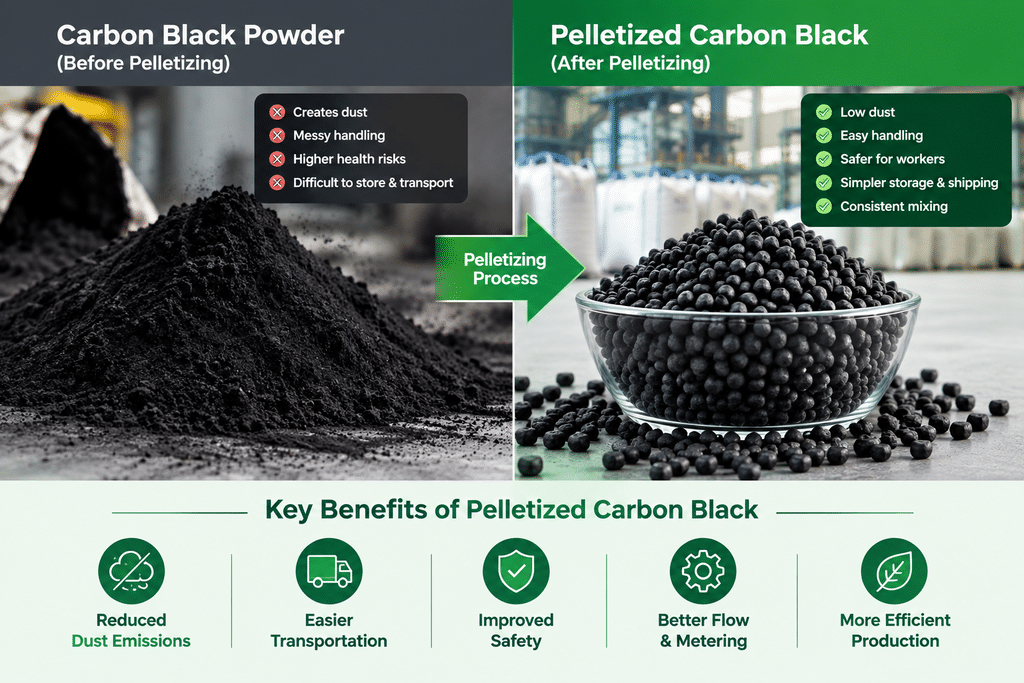
Pellets flow like small grains rather than clinging to surfaces the way powder does. Workers can scoop, pour, and load pelletized carbon black without it sticking to gloves, tools, or clothing.
Less Dust
This is probably the single biggest reason plants switch to pellets. Airborne carbon black dust is a housekeeping problem and a respiratory concern for workers. Pelletizing traps most of the fine particles inside the granule, so far less dust escapes into the air during handling.
Better Transportation
Because pellets are denser and more compact than loose powder, more material fits into the same container or truck. They also settle less during transit, which means fewer complaints about compacted or caked material arriving at the destination.
Consistent Mixing
When pellets break down during processing, they tend to disperse more evenly through rubber or plastic compounds than powder does straight out of the bag. This is especially true for carbon black pellets for rubber, where even dispersion directly affects tensile strength and abrasion resistance in the finished product. Powder, by contrast, can clump if it’s exposed to any moisture before mixing.
Cleaner Workplaces
Plants that switch from powder to pellets often notice an immediate difference in how clean their floors, equipment, and storage areas stay. Less airborne dust means less buildup on machinery, which can also reduce maintenance downtime.
Reliable Production
Because pellet size and moisture content are controlled during manufacturing, batch-to-batch consistency tends to be better. That reliability matters a lot in industries like tire manufacturing, where even small variations in raw material can affect product performance.
Common Uses of Pelletized Carbon Black
Tire Manufacturing
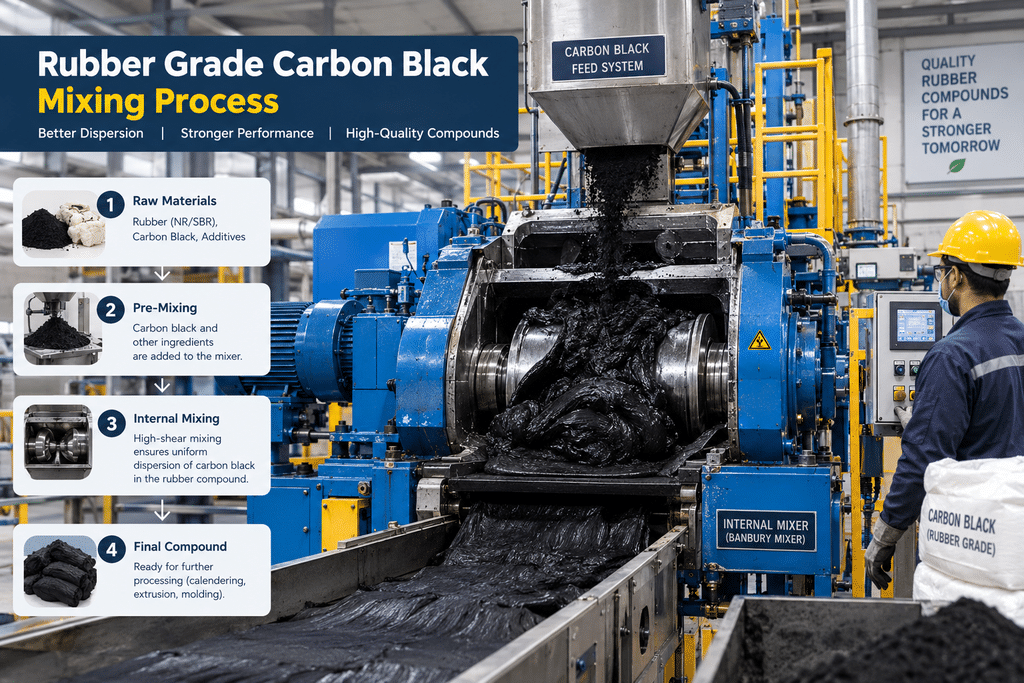
Tires are, by far, the largest end use for carbon black worldwide. It’s blended into the rubber compound to improve tread wear resistance, strength, and durability. Pelletized carbon black is especially useful here because tire plants run continuous, high-volume mixing operations that depend on steady material flow.
Rubber Products
Beyond tires, carbon black strengthens rubber used in hoses, belts, seals, and gaskets. It acts as a reinforcing filler, meaning it helps the rubber resist tearing, abrasion, and general wear over time. This is where carbon black pellets for rubber applications really matter — the right grade and consistent pellet quality directly influence how the finished rubber part performs in the field.
Plastic Manufacturing
In plastics, carbon black serves two main purposes: adding black color and protecting the material from UV degradation. Pelletized carbon black grades made for plastics are typically produced with tighter particle size control so they blend cleanly without leaving specks or streaks in the finished product.
Masterbatch Production
Masterbatch producers pre-mix concentrated carbon black with a carrier resin, which plastic manufacturers then dilute during their own processing. Using pelletized carbon black at this stage helps keep dispersion even and avoids the dust issues that come with feeding raw powder into extrusion equipment.
Conductive Plastics
Certain grades of conductive carbon black are engineered with a specific particle structure that allows electricity to pass through the plastic once mixed in. These grades show up in things like anti-static packaging, fuel system components, and electronic housings where static buildup needs to be controlled.
Industrial Coatings
Paints, inks, and coatings use carbon black both for its deep black pigment and for added UV resistance. Pelletized forms are easier for coating manufacturers to dose accurately compared to powder, which tends to clump when it comes into contact with liquid components.
Other Industrial Applications
Carbon black also turns up in battery components, printing toner, construction materials, and various specialty compounds where its combination of color, reinforcement, or conductivity properties is useful.
Pelletized Carbon Black vs Powder Carbon Black
| Factor | Pelletized Carbon Black | Powder Carbon Black |
| Dust generation | Low | High |
| Handling | Easy to scoop and pour | Sticks to surfaces, harder to manage |
| Transportation | Compact, settles less during transit | Prone to compaction and spillage |
| Storage | Stable in standard warehouse conditions | More sensitive to moisture and airflow |
| Mixing behavior | Breaks down evenly during processing | Can clump if exposed to moisture |
| Workplace cleanliness | Cleaner floors and equipment | Requires more frequent cleaning |
| Industrial preference | Preferred for large-scale, continuous operations | Sometimes used in smaller batch or specialty processes |
Powder carbon black still has a place, particularly in smaller specialty applications or processes where the exact fine particle form is needed before any pelletizing occurs. But for most large-scale industrial use, pellets are the practical choice — which is also why demand for a dependable pelletized carbon black supplier has grown alongside the shift toward pellet form.
Key Properties
| Property | Typical Characteristic |
| Appearance | Small black granules, uniform in size |
| Flowability | Free-flowing, pours easily |
| Dust generation | Minimal under normal handling |
| Storage stability | Stable when kept dry and sealed |
| Processing suitability | Breaks down cleanly during mixing or extrusion |
Storage and Handling Tips
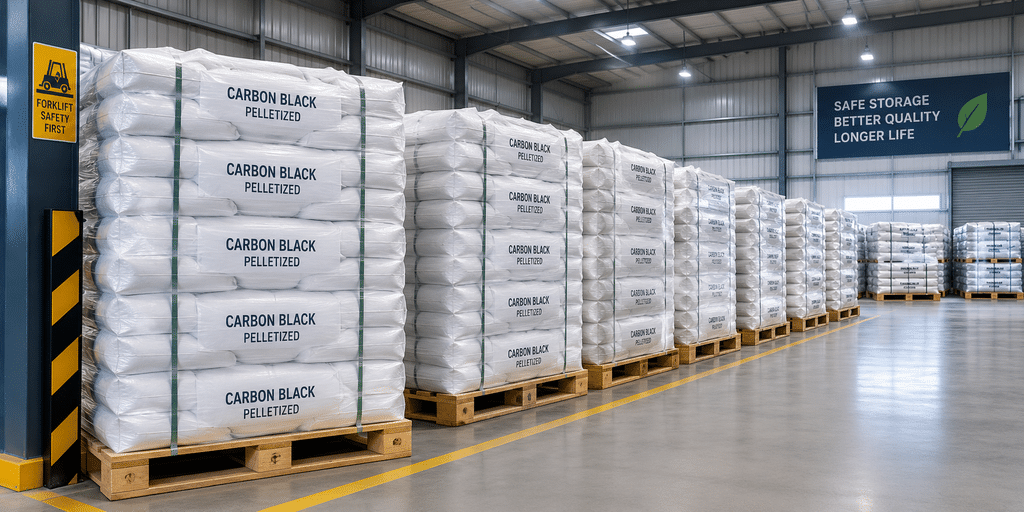
Keeping pelletized carbon black in good condition isn’t complicated, but a few basics go a long way.
Moisture is the main thing to watch. Pellets that absorb too much humidity can soften and break apart, bringing back the dust problem you pelletized to avoid in the first place. Store bags and containers in a dry warehouse, off the ground, and away from areas prone to condensation.
Original packaging is usually designed to keep moisture out, so avoid transferring material into open containers unless you’re using it right away. If bags are damaged during transport, reseal or repackage them promptly rather than leaving them exposed.
In the warehouse, stack bags according to the supplier’s guidelines to avoid crushing lower layers, which can compact pellets and affect flow later on. And as with any fine particulate material, workers handling carbon black should still use basic protective equipment like gloves and dust masks, even though pellets produce far less airborne dust than powder.
Choosing the Right Grade
Not all pelletized carbon black is the same, and picking the right grade depends on what you’re making.
For rubber products, especially tires, the particle size and structure of the carbon black affect properties like abrasion resistance and tensile strength, so grade selection usually follows the specific rubber compound formulation and often references ASTM D1765 grade codes (such as N330 or N550).
For plastic applications, the priority often shifts toward color consistency and UV protection, which means finer, more uniformly dispersed grades tend to work best.
If you need conductive properties, you’ll want a specialty conductive grade rather than a standard reinforcing or coloring grade — these are engineered differently at the particle level to allow electrical conductivity.
Your manufacturing process also plays a role. High-speed continuous mixing lines may need pellets with specific hardness and dispersion characteristics compared to slower batch processes.
Finally, don’t underestimate supplier consistency. Two suppliers can offer carbon black with the same technical specification sheet but noticeably different real-world performance, simply because of variations in their production control. Working with a supplier who can consistently hit the same specs, shipment after shipment, often matters more than chasing the lowest price per ton.
What Buyers Should Ask Before Choosing a Supplier
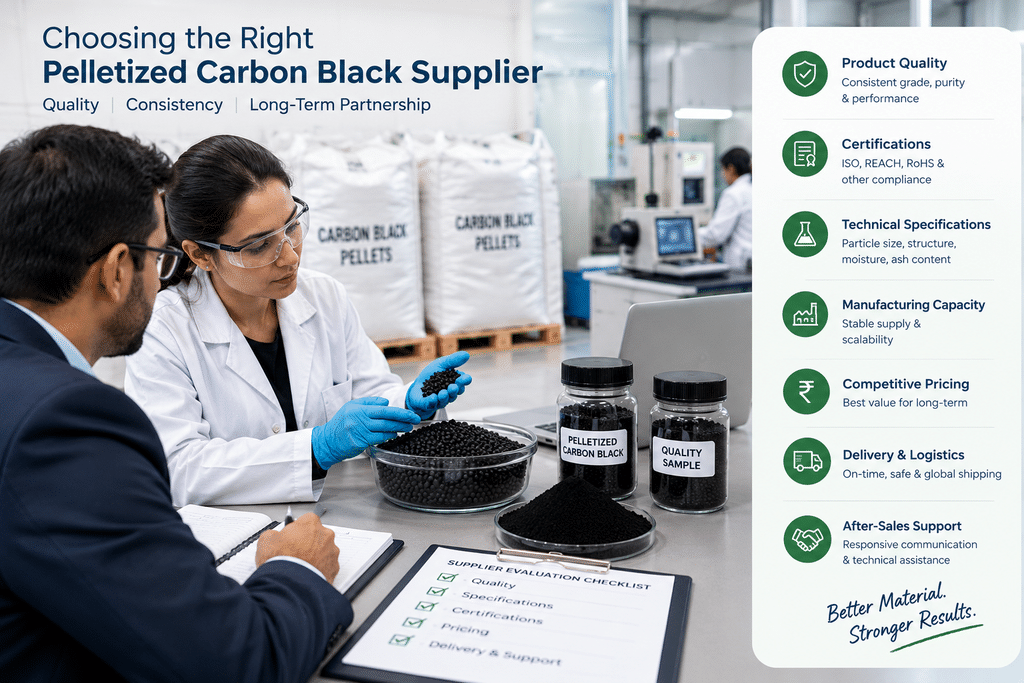
Sourcing pelletized carbon black isn’t just about comparing price per ton. A few pointed questions upfront can save a lot of trouble later:
- Can you provide a certificate of analysis for every batch?
Consistent documentation is a sign the supplier tracks quality closely, not just occasionally. - What ASTM or ISO grade classification does this product meet?
A credible pelletized carbon black supplier should be able to reference recognized standards like ASTM D1765 without hesitation. - What’s your pellet hardness and moisture specification?
These two factors determine how well the pellets will survive shipping and handling before they reach your mixing line. - Can you supply consistent volumes for continuous production?
If you’re running a tire plant or high-volume compounding line, ask about their production capacity and lead times, not just their lowest-order pricing. - Do you have experience with my specific application?
A supplier who regularly ships carbon black pellets for rubber compounding will understand different requirements than one focused mainly on plastics or coatings. - What’s your track record on batch-to-batch consistency?
Ask for references or case studies from customers in your industry. - How is the product packaged and protected from moisture during transit? Packaging quality affects whether pellets arrive intact or partially broken down.
Treat these questions as a starting point for a real conversation, not a checklist to rush through. The right supplier relationship often matters more to your production quality than any single spec on paper.
Frequently Asked Questions
Q1. What is pelletized carbon black?
It’s carbon black that has been formed into small, dense granules instead of being left as loose powder, making it easier to handle, store, and transport.
Q2. Why is carbon black made into pellets?
Pelletizing reduces dust, improves flow, and makes the material safer and more efficient to handle in industrial settings.
Q3. Is pelletized carbon black better than powder?
For most large-scale industrial uses, yes. Pellets are easier to manage, cleaner to work with, and mix more consistently. Powder still has a place in certain specialty or small-batch applications.
Q4. Which industries use pelletized carbon black?
Tire manufacturing, rubber goods, plastics, masterbatch production, coatings, and battery or electronics manufacturing all use it in some form.
Q5. Can it be used in plastics?
Yes. It’s commonly used to add black color, protect against UV degradation, and in some grades, provide electrical conductivity.
Q6. Does it reduce dust?
Yes, significantly. Because the fine particles are bound together into granules, far less dust becomes airborne during handling compared to powder.
Q7. How should it be stored?
In a dry, sealed environment away from moisture, ideally off the ground and in original packaging until it’s ready to be used.
Q8. What is conductive pelletized carbon black?
It’s a specialty grade engineered with a particle structure that allows electrical current to pass through the material once blended into plastic or rubber, used in applications like anti-static packaging and electronic components.
Q9. Does pelletizing change the chemical properties of carbon black?
No. Pelletizing is a physical process. The carbon black itself remains chemically the same; only its physical form changes.
Q10. How do I know which grade is right for my application, and how do I choose a pelletized carbon black supplier?
Grade selection depends on your end product — rubber, plastic, coatings, or conductive applications each call for different particle characteristics. From there, choosing a supplier comes down to consistency: certificates of analysis, adherence to ASTM/ISO classification, and a track record of stable batch-to-batch quality.